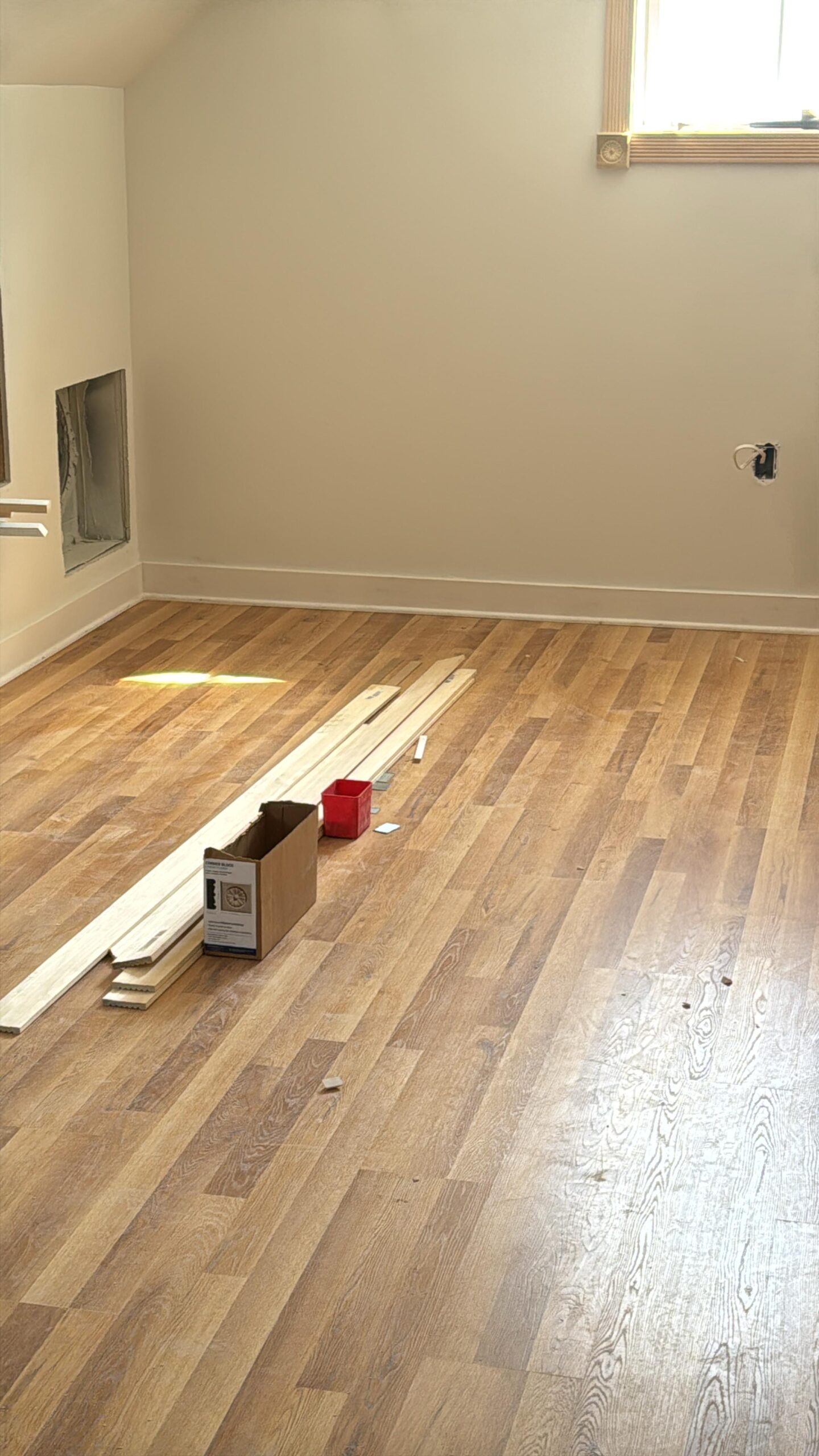
If narrow seams start showing between hardwood boards after you turn on the heat in your Northern Neck home, check how the gaps change over time. Wood can shrink as it loses moisture in dry indoor air, then expand as humidity rises. A small gap that opens in the heating season and closes in more humid months can be part of that cycle. National Wood Flooring Association guidance on moisture and wood floors.
Record what you see before filling a gap
Take a photo with a ruler beside the seam and note the date and room. Check whether the gaps are scattered across several boards or concentrated in one spot, such as near an exterior door or beside the dishwasher. Take another photo from the same angle in a few weeks. That record gives you something more reliable than memory when you compare the floor across seasons.
If you have a room hygrometer, write down the indoor relative humidity when you take each photo. Look for the care instructions for your specific flooring before changing how you manage humidity. The manufacturer can tell you what conditions it recommends for that product. Bruce’s homeowner guide to hardwood flooring care.
Know when the floor needs a closer look
Ask for a professional review if gaps are large or stay open through more humid weather. Raised edges along several boards, known as cupping, can point to a moisture change and are worth mentioning when you call. Bring your photos and describe any nearby water incident or recent changes in the room. These clues help guide the review.
If you’re planning a flooring repair or replacement in Virginia’s Northern Neck, contact AMC Remodels to request an estimate at amcremodels.com.