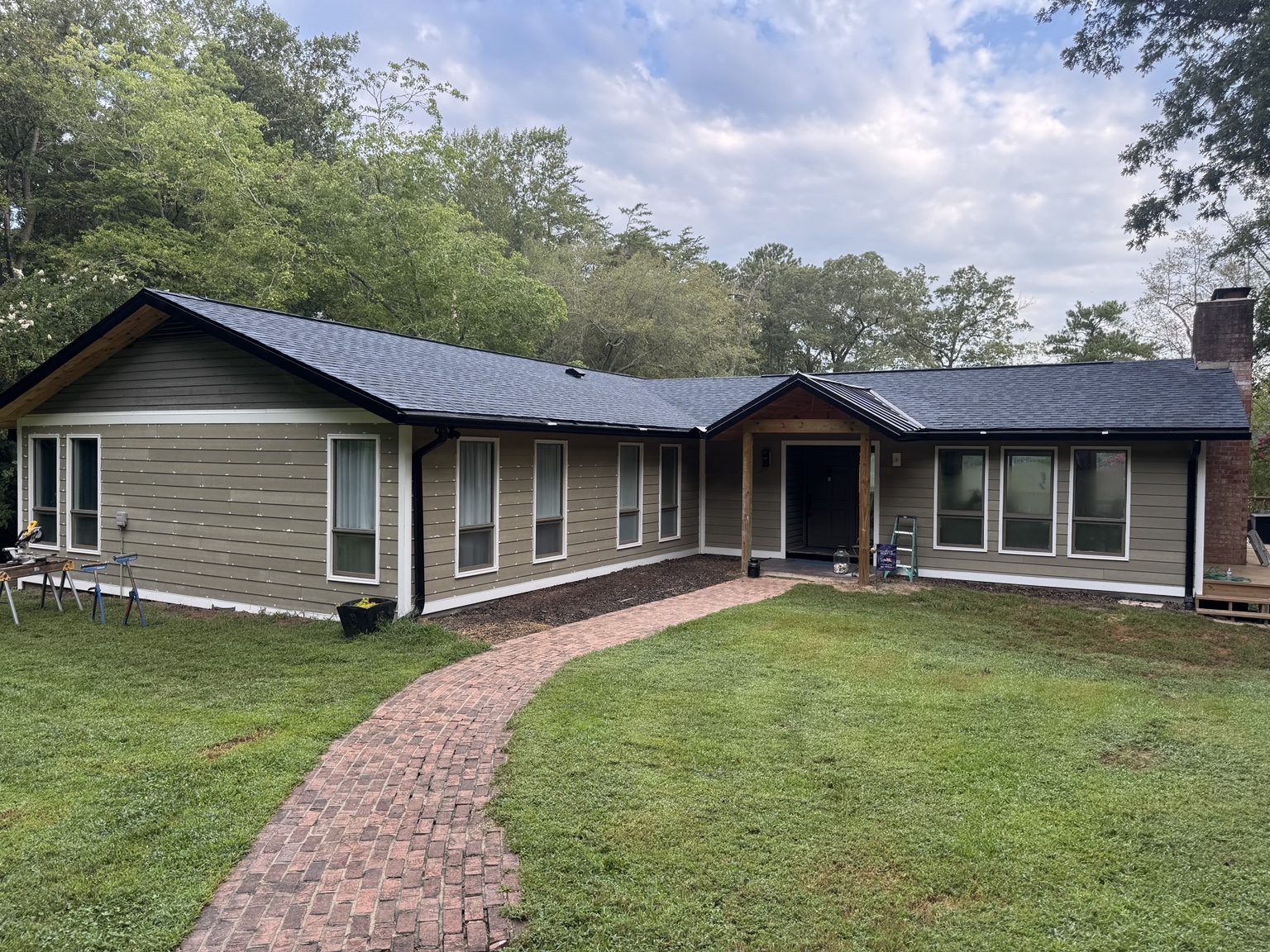
After the next steady rain in Virginia’s Northern Neck, take a walk around your house. Start below the roof edge and follow the path water takes to the yard. The U.S. Department of Energy’s guide to roof runoff explains why that path matters. Water that drains next to the house can saturate the soil along the foundation.
Look for where water leaves the gutter
From the ground, look for fresh splash marks on siding, a strip of displaced mulch under the roof edge, or drips from a gutter joint. Write down the location, such as the corner above the back steps. If you can see the same spot from indoors during ordinary rain, check whether water spills over there while it is still coming out of the downspout. A short video can be useful when you ask someone to look at it.
Follow the downspout to its outlet
See where each visible outlet sends water. Look for a loose extension, a low spot where a puddle remains, or a path that leads back toward the house. If a downspout connects to a buried pipe, note that detail so the person checking it knows where the visible system ends. The EPA’s remodeling guidance identifies downspout discharge and the slope of the ground as two things to consider when assessing foundation moisture.
Bring photos if the same spot stays wet
If you keep finding water in the same place, take a wide photo that shows the roof edge, the outlet and the wet area. Add a closer photo if you can see a loose connection. If dampness also shows up indoors, tell the contractor where and when you noticed it. For help planning exterior repairs or requesting an estimate, contact AMC Remodels.